

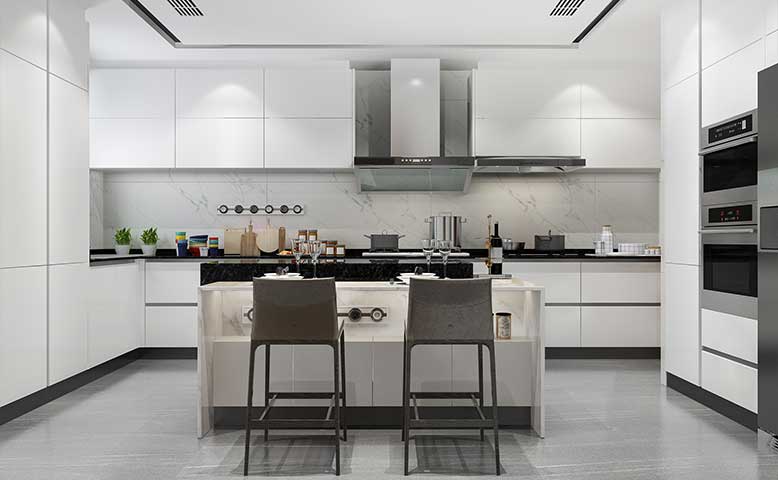
Your kitchen should feel easy to live in. Yet many kitchens feel cramped, dark, or messy. You may bump into people, hunt for tools, or run out of counter space. That daily stress adds up fast. The good news is this: kitchen remodeling does not have to mean “tear it all out.” Instead, you can make smart changes that improve how the room works and how it feels.
Even better, most upgrades give you clear benefits right away—more storage, better lighting, safer movement, and faster cleanups. Below are 8 practical ideas you can mix and match. I’ll keep it simple, so you can picture each change in your own home.
1) Fix the Flow First
If your kitchen feels tight, start with the walkways. You will feel the difference every day. Designers often use planning guides that suggest 42 inches for a work aisle with one cook. Also, they suggest 48 inches when two people cook together.
So, before you pick colors, check your clear space:
First, measure between counters, islands, and appliances.
Next, look for pinch points near the fridge and sink.
Then, reduce obstacles that cause “traffic jams.”
Even small shifts help. For example, moving an island a few inches can stop constant bumping. As a result, cooking feels calmer and faster.
2) Add Storage That Actually Works
Storage should match your habits. Otherwise, your counters turn into a “drop zone.” So, focus on spots you use every day.
Try these high-impact changes:
Pull-out shelves for lower cabinets, so you stop digging in the back.
Deep drawers for pots and pans, since stacking wastes time.
A pantry zone with clear bins, so snacks and staples stay visible.
Also, think in “stations.” Keep pans near the stove. Keep knives near the prep space. Then, place plates near the dishwasher. That simple logic saves steps daily, which is a big WIIFM win.
“A tidy kitchen is not about perfection. It’s about making the next meal easier.”
3) Light It in Layers
Bad lighting makes everything harder. It hides messes, strains eyes, and kills the mood. So, use layers instead of one harsh ceiling light.
Aim for three types:
Ambient lighting for the whole room
Task lighting for counters and the sink
Accent lighting for warmth and depth
Also, LEDs help you cut energy use. In fact, the U.S. Department of Energy says residential LEDs can use at least 75% less energy than incandescent lighting.
That means you can add more light without “paying for it” every month. As a result, your kitchen feels brighter, safer, and more welcoming.
4) Choose Counters You Can Live With (Idea 5)
Counters take a beating. They get heat, spills, knives, and heavy bags. So, the best counter is the one you can use without worry.
Before you pick a material, ask:
Will I stress about stains?
Will hot pans cause damage?
Will I need special cleaning steps?
Also, think about edge shape and finish. A softer edge can feel better for kids. A matte finish can hide smudges. As a result, you get a surface that supports real life, not just photos.
“The best countertop is the one you won’t baby.”
5) Make Your Backsplash Do More (Idea 6, with subheadings)
A backsplash can be more than decoration. It can make cleaning faster and protect the wall. So, pick something that fits your routine.
Easy-clean surfaces
Smooth, sealed surfaces wipe down faster. Also, fewer grout lines usually mean less scrubbing.
Smart coverage zones
Go higher behind the stove. Then, add side coverage near trash and prep space. Those areas get the most splatter.
Simple visual tricks
Light colors can brighten a dark kitchen. However, medium tones can hide cooking stains better. So, pick what matches your habits.
This idea pays off daily because cleanup becomes quicker and less annoying.
6) Upgrade the Sink Area (Ideas 7–8)
You use the sink more than you think. So, small changes here can feel huge.
First, consider a deeper sink if splashes drive you crazy. Next, add a pull-down sprayer for faster rinsing. Also, choose a faucet that saves water without feeling weak.
For efficiency, the EPA’s WaterSense program has long used faucet specs tied to flow limits, such as 1.5 gallons per minute in prior guidance.
However, some newer updates and local rules can differ, so it’s smart to check your area’s current standard.
7) Add an Island Only If It Helps
An island looks great, but it must earn its space. So, treat it like a tool, not a trophy.
Here’s a simple way to decide what your island should do:
| Time Saver | Cost Saver | Stress Saver |
| • Prep zone near sink • Microwave drawer spot • Trash pull-out nearby | • Keep existing plumbing • Use standard cabinet sizes • Skip fancy add-ons | • Seats for quick meals • Landing spot for groceries • Extra outlets for tools |
Also, keep a safe aisle space around it. Those clearance guidelines matter most here.
As a result, your island improves flow instead of blocking it.
8) Pick Finishes That Stay Calm
Finishes shape the “feel” of your kitchen. Yet fingerprints, smudges, and scratches can ruin the joy fast. So, choose finishes that forgive daily life.
Helpful options include:
Mid-tone cabinet colors that hide wear
Durable flooring that handles spills
Hardware that feels good in your hand
Also, keep your palette simple. Then, add personality with small items you can change later. That lowers regret, which saves money and stress.
Finally, remember why you started. You want a kitchen that supports your life. That is the real goal of kitchen remodeling.
Conclusion
When you focus on flow, light, storage, and daily comfort, your kitchen starts working for you. Also, each idea above gives you a clear benefit you’ll feel right away. If you want professional help planning kitchen remodeling, Veritas Building Company Inc can support the process with a clear scope and quality workmanship.